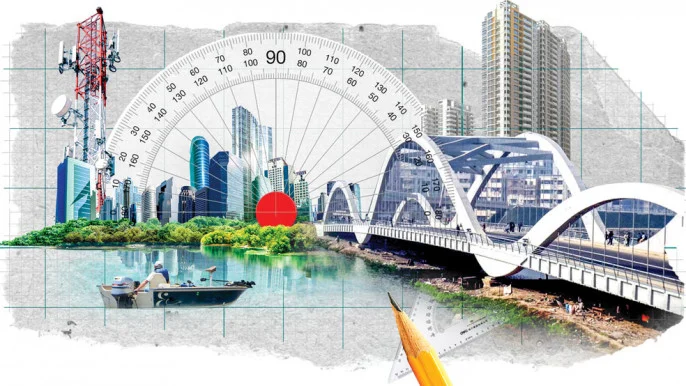
Bangladesh is currently navigating one of the most transformative periods in its history. Following the significant political shifts in mid-2024, the nation is in a state of transition, striving to redefine its democratic values while stabilizing its economy. This article explores the multifaceted dimensions of current-day Bangladesh, focusing on governance, economic resilience, social dynamics, and its role on the global stage.
The Political Transition and Governance
The political landscape has seen a paradigm shift. After years of a specific administrative structure, the country is now under an interim governance system tasked with deep-seated institutional reforms.
- Institutional Reforms: There is a strong emphasis on reforming the Election Commission, the judiciary, and law enforcement agencies to ensure transparency and accountability.
- Student-Led Movements: The influence of the youth, particularly students, remains a defining feature of the current political discourse. Their demand for a "discrimination-free" society continues to shape policy discussions.
Economic Hurdles and Resilience
While Bangladesh has been a "development miracle" for over a decade, it currently faces significant macroeconomic pressures.
- Inflation and Cost of Living: High inflation, particularly in food and energy sectors, has impacted the middle and lower-income populations. Addressing supply chain disruptions is a top priority for the current administration.
- Banking Sector Stablization: The government is working rigorously to address non-performing loans (NPLs) and restore discipline in the financial sector to regain investor confidence.
- The RMG Sector: The Ready-Made Garment industry remains the backbone of the economy. However, diversifying the export basket beyond textiles is essential for long-term sustainability.
Social Fabric and Human Rights
The social climate in Bangladesh is vibrant yet cautious. There is a renewed focus on freedom of speech and the protection of minority rights.
- Media Freedom: After a period of restricted expression, the media is finding its voice again, though challenges regarding misinformation and polarized narratives persist.
- Education Reform: There are ongoing debates and initiatives to modernize the national curriculum to better align with the global job market and ethical values.
Climate Change: An Existential Threat
Bangladesh remains one of the most vulnerable countries to climate change. Despite contributing minimally to global carbon emissions, the country faces rising sea levels, cyclones, and salinity intrusion in the south.
- Adaptation Strategies: The country is a global leader in community-based adaptation. Investing in "climate-smart" agriculture and resilient infrastructure is no longer a choice but a necessity.
Digital Transformation
The "Digital Bangladesh" vision has evolved. The focus has shifted toward "Smart Bangladesh," emphasizing AI integration, cybersecurity, and a cashless economy. The freelance community and the tech startup ecosystem are growing, providing a beacon of hope for the unemployed youth.
Foreign Policy and Global Relations
Bangladesh maintains a policy of "Friendship to all, malice towards none." However, the geopolitical stakes are higher than ever.
- Balancing Powers: Navigating relationships with major powers like India, China, the US, and the EU requires sophisticated diplomacy.
- The Rohingya Crisis: Hosting over a million Rohingya refugees continues to be a massive humanitarian and security challenge, requiring sustained international intervention and a focus on repatriation.
Bangladesh stands at a crossroads. The road ahead is paved with challenges—from economic stabilization to ensuring a fair democratic process. However, the resilience of its people and the energy of its youth suggest a future of immense potential. If the current reforms succeed, Bangladesh could emerge as a more equitable and prosperous nation in the heart of South Asia.